• Newer
  • Older
bonus-curios-desert-oasis-source-thumbnail

Bonus curios: a desert retreat’s surprising source

July 8, 2014 by Ashley Mannetta

Heat weighs heavy in the arid desert. Rain offers little relief; it often evaporates even before it hits the ground. So how do oases—those lush breaks in the monotonous landscape—form?

Once you dig deep enough, it’s surprisingly easy to find water. Beneath desert sands, porous rocks like limestone hold huge reserves of water, called aquifers—imagine a sodden sponge, not a freely flowing river. Layers of hard, impenetrable rock above and below these stores keep water in place. Cracks along the hard rock layers let water in and out. Occasional rain seeps underground to recharge aquifers. When water surfaces, it springs forth to form shimmering oases.

Oases can be quite large. Four great springs feed the Ein Gedi oasis of Israel, generating a total of three million cubic meters of water per year, enough to fill 1,200 Olympic swimming pools. The result is a verdant oasis known for its botanical gardens and copious bottled water production.


An interactive diorama of the earth’s biomes, Plants brims with secrets and surprises—we’ve even made a handbook of hints and fun facts for you and your kids. In these posts, we’ll peer into the sometimes-strange truths behind the worlds in our apps.

Read more…
Tags:
  • Bonus Curios
  • Plants
  • The Explorers Library
thumb

Bonus curios: astronaut hearts & puffy heads

July 1, 2014 by Sara Distin

The heart is a robust muscle. It bustles blood through the whole body, fighting gravity to send fresh blood to the brain, while gravity pulls blood to your other parts below the heart. When astronauts rocket into space, there’s less gravity to ease blood down. More fluid than usual floats into their necks and heads making their faces and neck veins swell.

Scientists at NASA have an experiment that shows how gravity affects your blood flow—here on earth: let your hand dangle below your waist for a couple minutes. Big veins, full of blood, will pop out. Now raise the same arm above your head for a minute. All the blood goes rushing down and those puffy veins disappear.


A working model of the amazing machines we live in, The Human Body shows what we’re made of and how we work. We’ve created a handbook of hints and insider intelligence for you and your kids. In these posts, we’ll peer into the sometimes-strange truths behind the worlds in our apps.

Read more…
Tags:
  • Bonus Curios
  • The Explorers Library
  • The Human Body
Screen-Shot-2015-10-28-at-4.28.26-PM

Bonus curios: the hidden micro winds of mushrooms

June 24, 2014 by Tina Lee

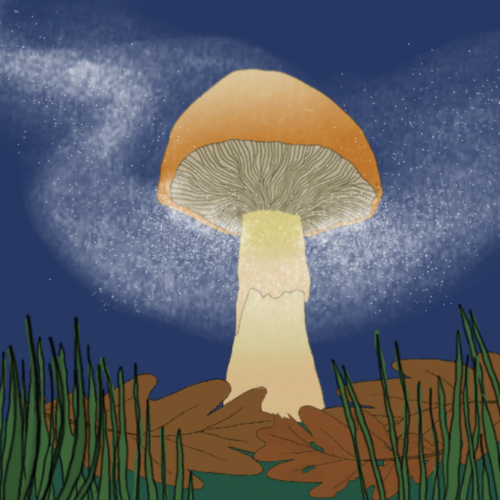
A mushroom isn’t a plant but a fungus. (The largest known living thing is a fungus sprawled out in Oregon—over 2,000 acres!) Fungi decompose leaves and other plant bits to get energy and recycle nutrients into the earth. Mushrooms also wield weather sorcery to disperse their “seeds,” aka spores.

A mushroom’s cap is packed with light, tiny spores. To give these spores a boost, mushrooms produce cooling mists that mix with warm air—and presto!—result in micro winds. These breezes send clouds of spores whirling outward to start new colonies.


An interactive diorama of the earth’s biomes, Plants brims with secrets and surprises—we’ve even made a handbook of hints and fun facts for you and your kids. In these posts, we’ll peer into the sometimes-strange truths behind the worlds in our apps.

Read more…
Tags:
  • Bonus Curios
  • Plants
  • The Explorers Library
Screen-Shot-2015-10-28-at-4.20.12-PM

A stop-motion universe for Plants

June 19, 2014 by Youngna Park

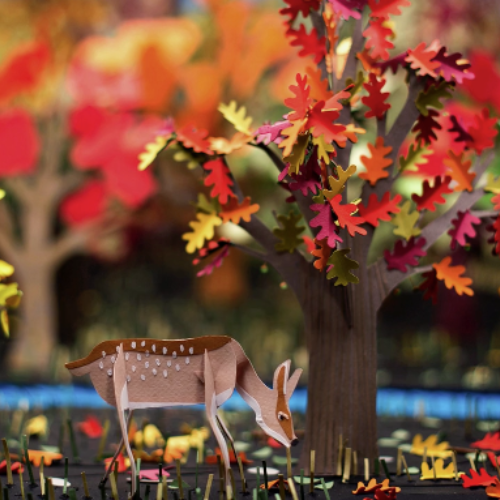
One of the things we love about Kelli Anderson is her enthusiasm for taking on seemingly impossible projects. After surprising us by creating this paper stop-motion video for The Human Body, we asked her to create another paper world–this one for Plants.

Read more…
Tags:
  • Plants
  • Video
bonus-curios-synchronous-fireflies-thumbnail

Bonus curios: synchronous fireflies light up the night

June 17, 2014 by Ashley Mannetta

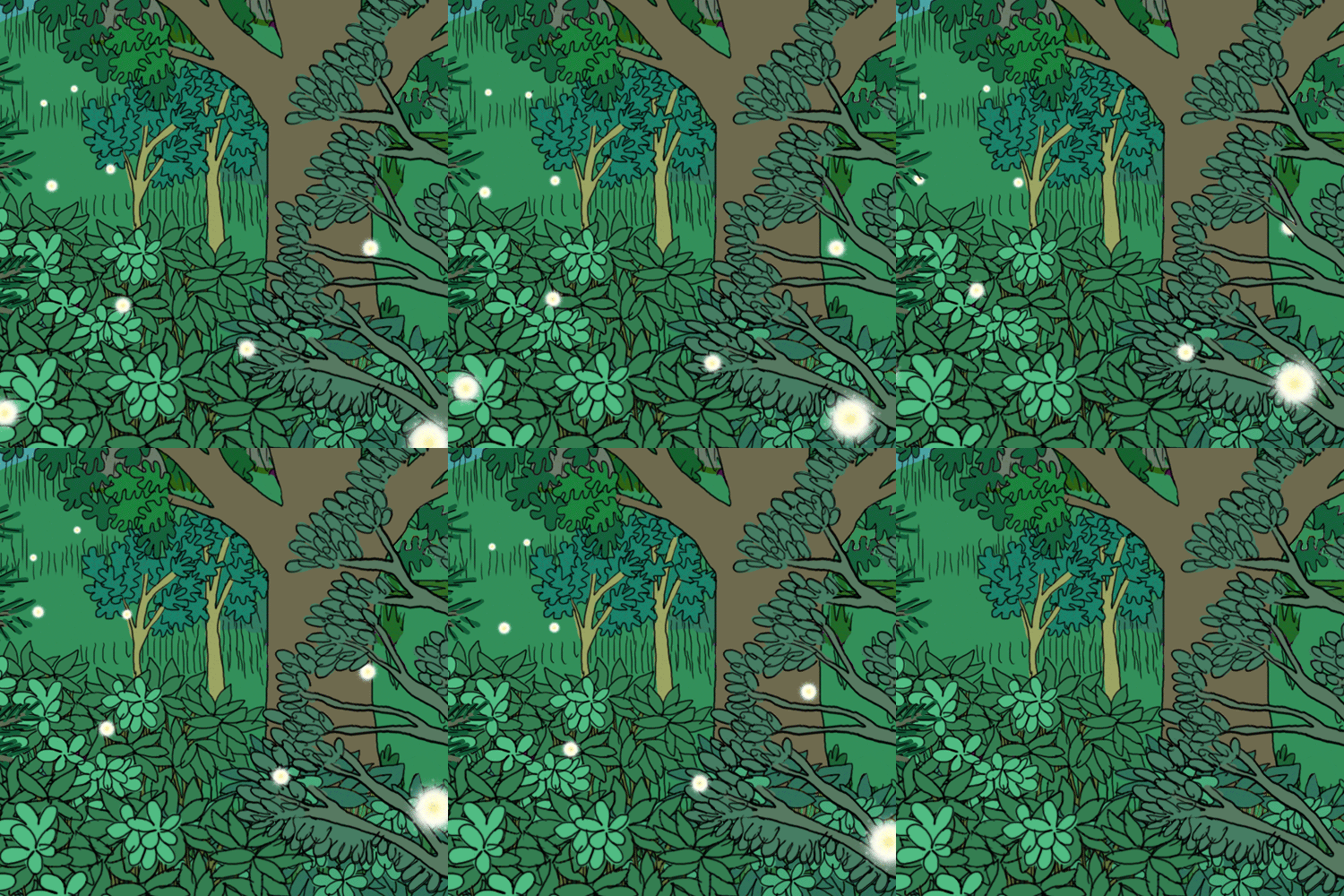
Early in the summer, fireflies flicker around forest trees. Their twinkling patterns seem random and uncoordinated, but that’s not always the case.

In the Great Smoky Mountains of North Carolina in the United States and dense forests of southeast Asia, some firefly species have rhythm. For about a half-minute, firefly males blink together to their own secret beat, then pause, as though waiting for a response. Scientists think these coordinated light shows may help these fireflies attract the right mates in places where multiple firefly species share a home. We like to imagine that the appeal of a good sense of rhythm is universal.


An interactive diorama of the earth’s biomes, Plants brims with secrets and surprises—we’ve even made a handbook of hints and fun facts for you and your kids. In these posts, we’ll peer into the sometimes-strange truths behind the worlds in our apps.

Read more…
Tags:
  • Bonus Curios
  • Plants
  • The Explorers Library
bonus-curios-plants-bloodroots-ants-thumbnail

Bonus curios: a friendship blooms between bloodroots & ants

June 10, 2014 by Tina Lee

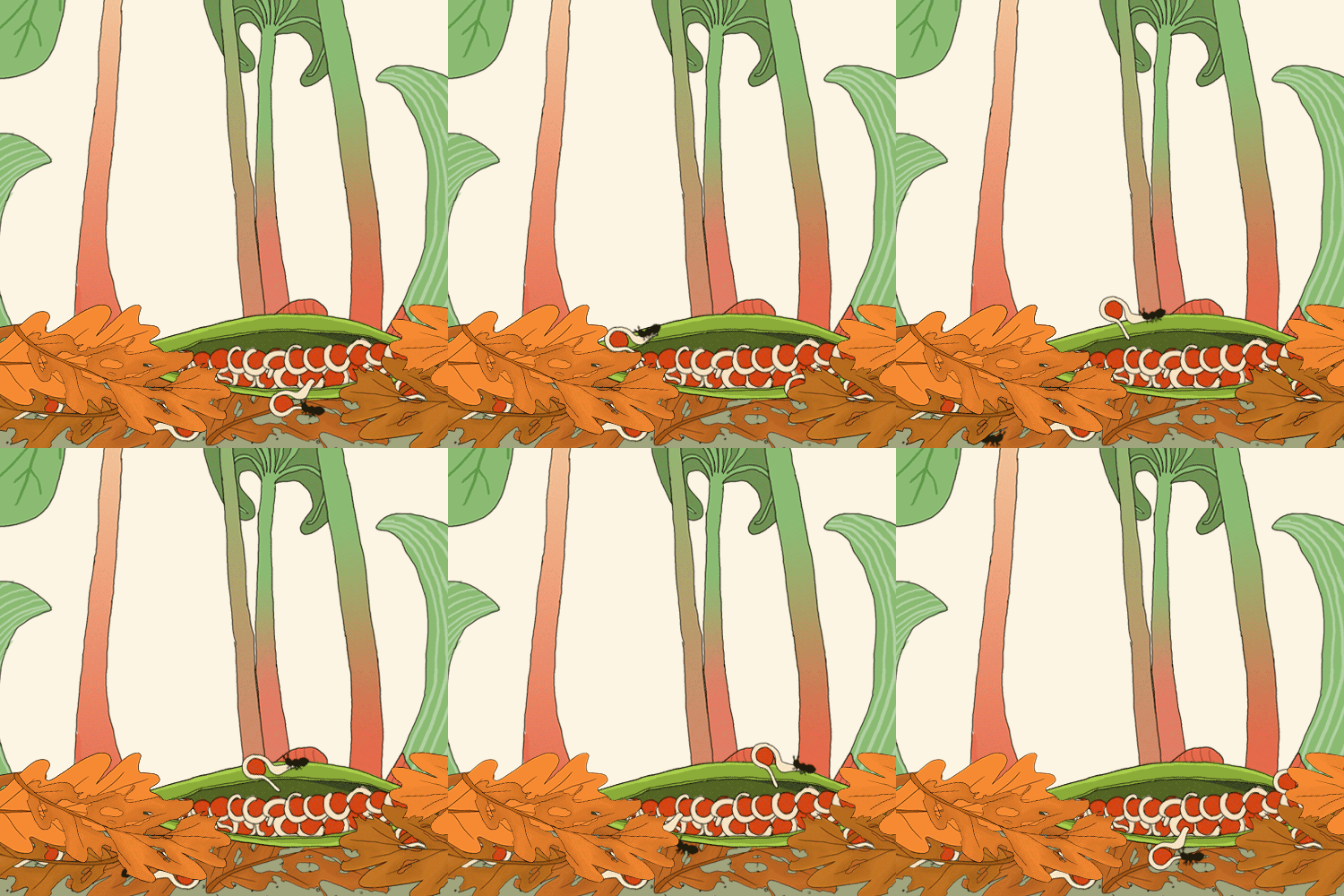
Plants need to spread their seeds to reproduce. To get the job done on the forest floor, the bloodroot wildflower—which oozes toxic, blood-red sap—has a novel partner: ants. A bloodroot seed’s outer coat comes with a fleshy nub called an elaiosome, which attracts ants. Worker ants cart seeds back to their nest, gorge on the flesh, and pile the still-intact seeds in the colony’s “trash room,” aka rich dirt prime for new bloodroots come spring.

This process, in which ants eat and disperse seeds, even has a name. It’s a mouthful: myrmecochory, based on the Greek word for ants, myrmeco.


An interactive diorama of the earth’s biomes, Plants brims with secrets and surprises—we’ve even made a handbook of hints and fun facts for you and your kids. In these posts, we’ll peer into the sometimes-strange truths behind the worlds in our apps.

Read more…
Tags:
  • Bonus Curios
  • Plants
  • The Explorers Library
a-new-human-body-update-treats-stings-thumbnail

A new Human Body: bright lights, toothsome treats & stings

June 3, 2014 by Sara Distin

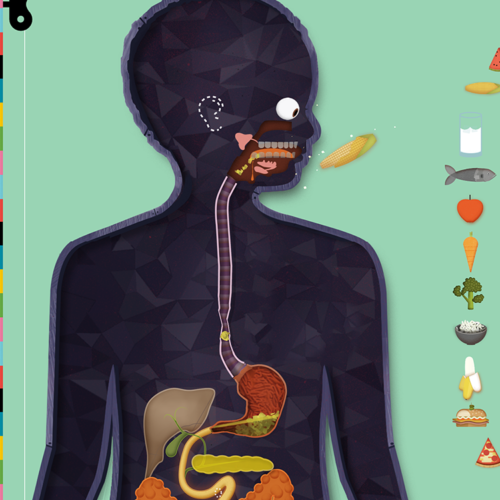
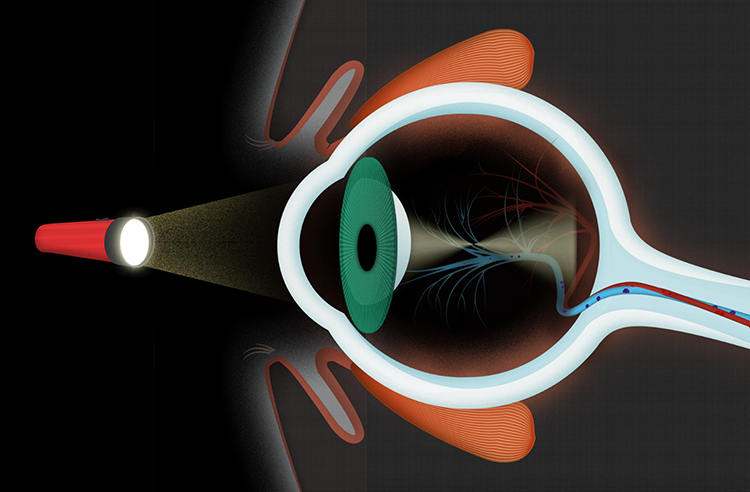
We built an even better Human Body. It’s hungrier, speedier, and more sensitive. In the updated version, feed the body a broader diet—including corn on the cob, an apple, rice, pizza, and birthday cake—set bees free to see how the nervous system reacts to their stings, and shine a flashlight into the eye to watch the pupil dilate.

The Human Body 2.0 is a faster friend to Airplay and includes three new languages: Flemish, Afrikaans, and Welsh. (Now we’re talking in 57 languages!)

Download the update on the App Store.

Read more…
Tags:
  • The Explorers Library
  • The Human Body
interview-with-plants-illustrator-marie-caudry-part-2-thumbnail

A conversation with Plants illustrator, Marie Caudry (part 2)

May 30, 2014 by Tina Lee

This is the second half of a two-part conversation with Plants illustrator Marie Caudry. Read the first part here.

Tell us a bit about where you live. Does this place affect your work?
I love visiting cities to enrich myself…taking in exhibitions and shows. These things are always very stimulating but I wouldn’t much like living in a city. Little by little, something deep inside of me wastes away.

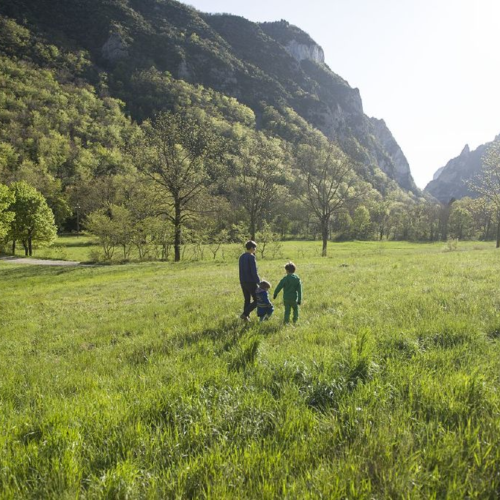
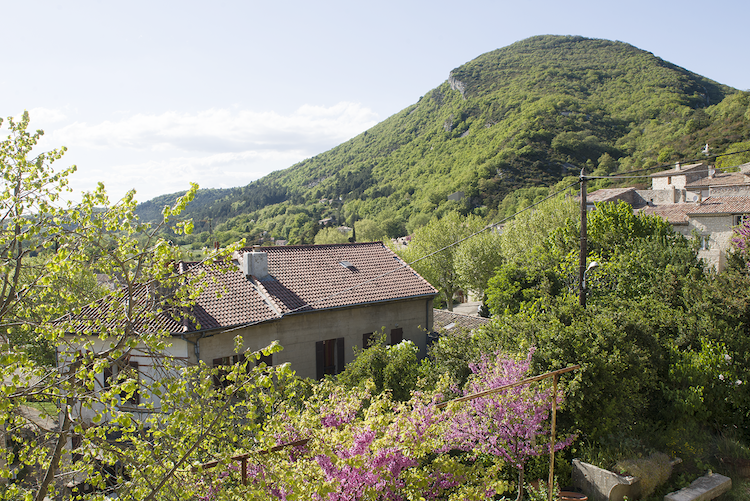
For three years I lived in the isolated little mountains in central France (in the Ardèche). I have a very strong connection to this landscape, where images of a fantasy nature and a familiar beauty anchored in reality are layered together in a place where time passes more slowly than anywhere else. But then I went back down to the plains to live in a Mediterranean climate. I am less inspired by this scenery but I live in a house that’s bathed in sunlight all year round, which is important as I am cooped up inside working all the time.

Where do you go for inspiration?
I really like the first Disney cartoons, especially the Silly Symphonies.

If I need ideas for compositions, colors, or details, I look at paintings, ancient engravings, or photos from the last century.

If you could absorb the powers from three people into your work, what would those powers and people be?
I aspire to the inventiveness of Saul Steinberg, the humor of Blake Edwards in The Party or of Jacques Tati in his films, and the charm of William Steig’s lines and texts.

What are your favorite children’s books?
Of contemporary work, I am a real fan of Aurore Caillas. I like everything in her work—her drawings, universe, stories, and her writing.

I always follow closely the works of Blexbolex, Gaëtan Dorémus, Marc Boutavant, and Beatrice Alemagna. Manuele Fior, Brecht Evens, Blutch, Daniel Clowes, Charles Burns, Lucie Durbiano, and Anouck Ricard…they impress me with every publication.

I read lots of William Steig, Claude Ponti, Kitty Crowther, and Arthur Geisert to my children because these are exactly what I want to share with them.

And from my childhood, there’s also Eloise by Kay Thompson and illustrated by Hilary Knight. It still influences me.

Illustration by Aurore Caillas.

Illustration by Brecht Evens.

What was your most prized possession as a child?
When I was a child, I played most with Koeda-chan, this incredible surprise planet toy with three universes: Earth, space, and ocean beds. I loved the big illustrations that extended the universes. It was really incredible. As this toy belonged to one of my friends and was no longer sold in France, I suggested trading all of my dolls for it and I’ve never regretted it (neither has she…I think).

What’s on your current reading list?
Recently I enjoyed Green Dolphin Country and To Kill a Mockingbird. I’ve just finished Edith Wharton’s The New York Stories, and I’m now reading Faillir être flingué by Céline Minard. It’s a thrilling western that’s very well written—a real treat! I think I practically read only women writers without having consciously made that decision.

As a child, I was frustrated that the heroines were always in the minority or that they were only used as window dressing in adventure stories. What an injustice!

And last: what would be your dream project?
Because this project with Tinybop opens up a whole range of possibilities linked to tablet apps, I’d like to create interactive fiction—and invent an entire universe, a portal for stories aimed at children.


You can see more of Marie’s work on her site.

Photos by Antoine Picard.

Read more…
Tags:
  • Interviews
  • Plants
interview-with-plants-illustrator-marie-caudry-part-1-thumbnail

A conversation with Plants illustrator, Marie Caudry (part 1)

May 28, 2014 by Tina Lee

One of our favorite parts at the start of each app is choosing an illustrator. For Plants, we’re so pleased to work with the delightful Marie Caudry, a French artist whose drawings brim with beautiful, witty details (from googly-eyed badgers to springy palms).

In this two-part conversation, we dig into Marie’s methods and inspirations, including her top kid’s book picks. Read on, and catch the second half Friday!

Do you have a work ritual? What does it look like?
I drink some coffee. I turn on my computer. I look at my emails. I listen to interesting podcasts. I drink some coffee. I might look at one or two unusual pictures on Tumblr that make me feel like making up stories, and I carefully store them in my collection for later. I drink some coffee. I choose one of the playlists named Orme, Chocolate, Falaise, or Printemps Vert. I drink some coffee. I start work. I’ve drunk too much coffee.

What are your top tools to work with?
I have a 0.5 mechanical pencil that uses 2B lead and a 0.18 technical pen that does what it wants if I forget about it for too long. Also ivory, grained paper.
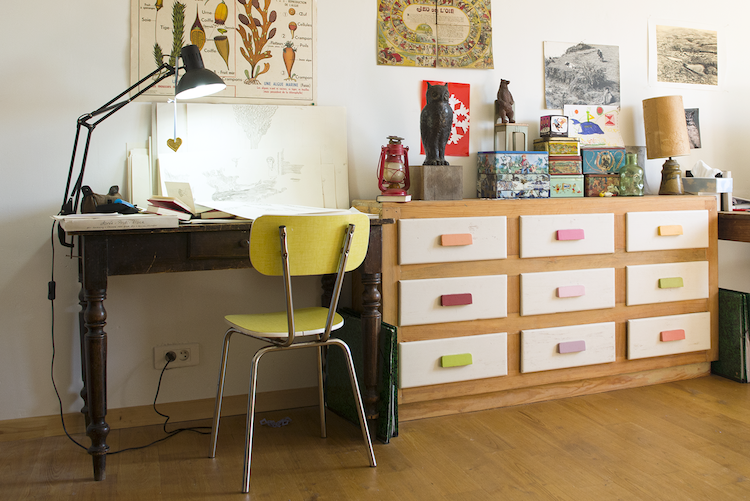
Have you worked on an app before? How does the medium affect your approach?
No, I’ve never created an app before. I usually illustrate books or make work for the youth press. But since I’m used to creating colors on a computer, working without paper doesn’t bother me.

On the other hand, for someone who has a sharp sense of detail, the act of drawing a rock that’s behind the tree, and drawing the bush behind that and so on is a dizzying experience. In place of the horizontal, cropped shapes we create for the format of books, another dimension is added. It’s stimulating and opens new horizons for me. (Editor’s note: Marie had to draw every object whole so it could be animated from multiple perspectives, instead of one object from one perspective for print.)

In terms of equipment, I’m going to have to get a tablet.

It’s strange to think that a job that took so much time to complete will take up no physical space in my library. It seems that this is a new step on my path.

How would you describe your illustration style?
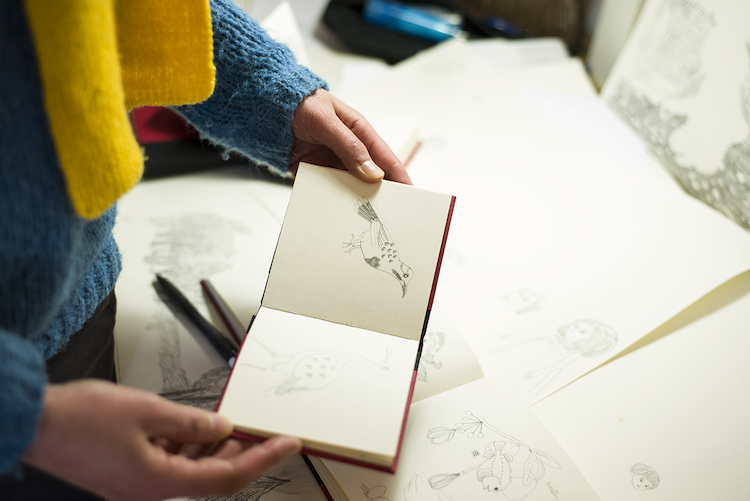
I believe my style comes from the almost systematic use of the ligne claire (the clear line, with no shadows, dark contours), my color range, my trademark sense of detail, and—I hope—that difficult-to-define something that is the unique personality of the illustrator’s pencil strokes.

Your drawings are full of humor. Are these moments conscious decisions?
Yes, I play with my drawings in the same way a child plays with his action figures, giving them character traits, intentions, and a presence, and talking to them. This isn’t done in a thought-out, intentional way; rather, a good work moment is a moment of complicity with shapes. And as my work is addressed to children, I particularly want to bring tenderness and humor to all of these little people.

Which biome did you enjoy illustrating the most? Why?
I love the tundra. At the moment, I’m really attracted to these large, cold spaces. I tried to translate it through color: the purity of the air and the biting cold that made the contrasts very clear.

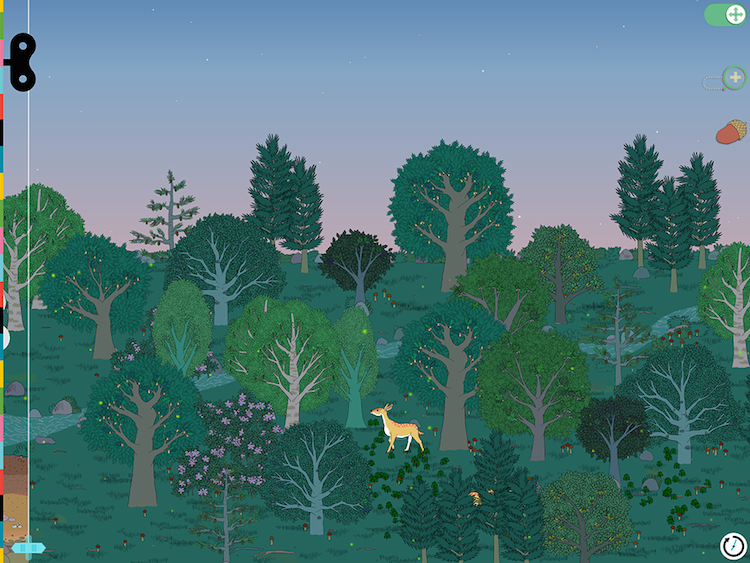
I also liked so much drawing nighttime in the forest. You imagine that strange and marvelous things happen in forests at night, like in A Midsummer Night’s Dream.

In the coming weeks I’ll visit the mangrove swamps. I’m so looking forward to this.

(Editor’s note: both the tundra and the mangrove swamps will be released with future app updates, alongside other new biomes.)
Outside of your field, whose work do you admire, and why?
Outside my field? Impossible, I only admire artists.

Obviously, I admire Miyazaki, Wes Anderson, and Michel Gondry for the incredible richness of their imaginations and the elegance with which they share it. They produce works for the public, but their works are both complex and profoundly original, almost private visions.

And novelists in general because they manage to create images with words.

I like going to contemporary art exhibitions that challenge and surprise me by shaking me out of the mental trap built of my own prejudices.

And I also like Daniel Clowes because he’s succeeded in creating really interesting characters that exist as vividly for me as characters do in a novel, which, to my mind, is rare and difficult to find in comic books.

You can see more of Marie’s work on her site.

Photos by Antoine Picard.

Read more…
Tags:
  • Interviews
  • Plants
plants-release-blog-2

Our new app: Plants has sprouted!

May 22, 2014 by Tina Lee

Three cheers, Plants is here! The second app in the Explorer’s Library, Plants is an interactive diorama of the world’s biomes. Alongside your kids, dive into the wilds of the green kingdom, from roots to shoots and spores to fronds. How do plants live and thrive? Why do some trees lose their leaves, and how do desert plants last in the driest sands?

We’ve been working hard to spring Plants out of our heads and into your hands. We started with countless hours of research, marveling over phenomena like leaf-digesting fungi, giant sand dunes that slowly shift and march across the desert landscape, and photosynthesis, the magical process in which a plant transforms sunlight and air into food (and oxygen—colossal algae colonies produce half our supply). We wanted to bring those wonders—both small and large—to life.

Over the next few months, we collaborated with French illustrator Marie Caudry, whose drawings imbue Plants with beauty and wit, composed a score of chirping birds and insects, quizzed botanists, devised algorithms that keep each biome’s interactions fresh, worked with translators around the globe (Plants is available in 50+ languages), and, as ever, tested the app with our brightest and toughest customers: kids.

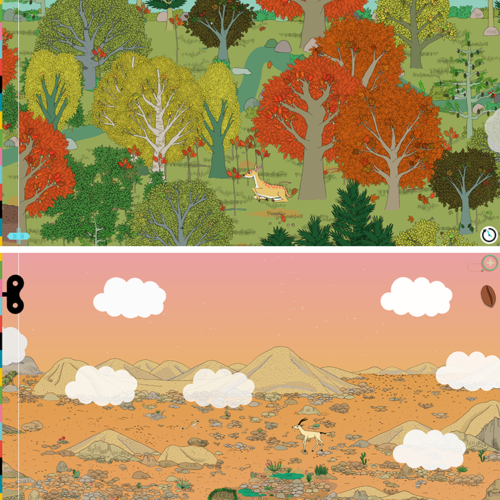
Plants starts in the forest and the desert.

Plants starts in the forest and the desert. You can get the app on the App Store at the introductory price of $1.99. Buy now, and get the next two biomes—the ice-cold tundra with a surprise soil underlayer, and the rustling, whooshing grasslands—for free when they’re out.

We’re so excited to hear your thoughts about the app, our hearts are doing somersaults. Big thanks again for your notes, support, and trust. We couldn’t do this without you. And stay tuned: we’ve got plenty more in store for young explorers!

Read more…
Tags:
  • News
  • Plants
  • The Explorers Library
  • Newer
  • Older